What is Classical Homeopathy
Classical homeopathy is a holistic system of healing that focuses on treating the individual as a whole rather than simply addressing isolated symptoms
Unlike conventional or “mixed remedy” homeopathy products that combine several remedies together, classical homeopathy follows a more personalized and methodical approach.
In classical Homeopathy, every person is assessed individually based on physical symptoms, emotional patterns, energy levels, lifestyle, and overall constitution. We call this as taking the totality of symptoms / picture of the person.
Rather than suppressing symptoms, homeopathy aims to support the body’s natural self-regulating processes.
New to Homeopathy? Start with our Beginner’s Consultation
Discover a personalized and holistic approach designed to understand your unique health story and wellness goals.
What Is Classical Homeopathy?
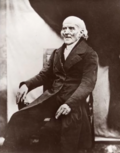
Classical Homeopathy is a precise and disciplined system of homeopathic practice rooted in the original teachings of Dr. Samuel Hahnemann, the founder of homeopathy.
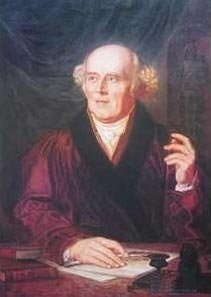
The foundations established by Hahnemann were later refined through the clinical observations of James Tyler Ken and further systematized, clarified, and expanded by George Vithoulkas.
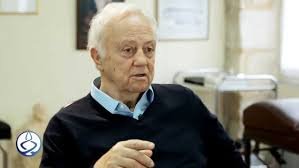
The term “Classical Homeopathy” was introduced by George Vithoulkas in 1978 to distinguish authentic, principle-based homeopathic practice from modern approaches that had moved away from the original methodology of Dr. Samuel Hahnemann.
Classical Homeopathy views each person as a unique individual with interconnected physical, emotional, and mental characteristics. Rather than treating isolated symptoms or disease labels alone, the practitioner seeks to understand the complete picture of the individual in order to select the most appropriate remedy.
It emphasizes:
- Individualized treatment
- Careful observation of symptoms
- One remedy at a time
- Understanding the totality of the person
- Supporting the body’s natural healing response
Students and practitioners of Classical Homeopathy study deeply the original teachings and writings of Hahnemann, Kent, and Vithoulkas. Their combined work forms the philosophical and practical foundation of classical prescribing.
Unlike generalized or mixed-remedy approaches, Classical Homeopathy follows a disciplined method that aims for precision and clarity in treatment.
The Concept of the Vital Life Force
One of the central ideas in Classical Homeopathy is the concept of the Vital Life Force.
According to homeopathic philosophy, the body possesses an innate intelligence that regulates health and maintains balance. When this vital force becomes disturbed by emotional stress, environmental influences, illness, trauma, or inherited tendencies, symptoms begin to appear.
Symptoms are therefore viewed not merely as problems to suppress, but as expressions of an internal imbalance.
The role of the correctly selected homeopathic remedy is to gently stimulate the Vital Life Force and encourage the body’s own healing response.
Principles of Classical Homeopathy
Classical Homeopathy is guided by several foundational laws and principles.
1. The Law of the Individual Remedy
Every patient requires a remedy specifically suited to their unique symptom picture, constitution, sensitivities, and overall state of health.
Even two individuals with the same diagnosis may require entirely different remedies.
2. The Law of Similimum
The selected remedy must closely match the totality of the patient’s symptoms.
This principle is often summarized as:“Like cures like.”
A substance capable of producing certain symptoms in a healthy person may help stimulate healing in a person experiencing similar symptoms when prepared homeopathically.
3. The Law of the Infinitesimal Dose
Homeopathic remedies are administered in highly diluted forms designed to gently stimulate the body’s healing response rather than suppress symptoms.
Classical Homeopathy emphasizes minimal intervention while carefully observing the patient’s response over time.
4. The Law of the Direction of Cure
According to classical homeopathic philosophy, healing tends to follow a recognizable pattern:
- From deeper organs to more superficial levels
- From more vital systems to less vital systems
- From recent symptoms toward older symptoms
- From the inside outward
This principle helps practitioners evaluate whether healing is progressing constructively.
5. The Principle of the Single Remedy
One of the defining characteristics of Classical Homeopathy is the use of only one remedy at a time.
This allows:
- Clear observation of the patient’s response
- More precise evaluation of progress
- Better understanding of remedy action
- Reduced confusion from combining multiple remedies
How Does Classical Homeopathy Work?
Classical Homeopathy works by selecting a remedy that closely matches the individual’s total symptom picture — physically, emotionally, and mentally.
The process involves:
- Detailed case-taking
- Holistic assessment
- Analysis of symptom patterns
- Selection of the similimum (best-matching remedy)
- Careful follow-up and observation
The goal is not simply symptom suppression, but supporting long-term balance and overall well-being.
What Is a Classical Homeopath?
A classical homeopath is trained to understand the patient as a whole person rather than focusing solely on disease labels.
Classicla Homeoapth studies:
- Physical symptoms
- Emotional tendencies
- Stress responses
- Energy patterns
- Sleep and digestion
- Personal sensitivities
- Medical history
- Constitutional characteristics
- George Vithoulkas also teaches the detailed concepts, case studies and advanced practices of managing Levels of Health of the person using classical homeopathy principles.
This approach requires:
- Careful observation
- Detailed case-taking
- Deep study of materia medica
- Understanding of homeopathic philosophy and how to manage constitutional care through levels of health study
- Precision in remedy selection and its potency based on the level of health of the person
What Happens in a Classical Homeopathy Consultation?
A classical homeopathy consultation is typically comprehensive and in-depth.
The practitioner explores:
- Current health concerns
- Emotional health
- Lifestyle and stress factors
- Sleep and eating patterns
- Personal medical history
- Long-term symptom patterns
- Constitutional tendencies

The purpose is to understand the complete individual rather than focusing on isolated symptoms alone.
What Makes Classical Homeopathy Different from Conventional Medicine?
Classical Homeopathy and conventional medicine are based on very different philosophies and methods.
| Classical Homeopathy | Conventional Medicine |
|---|---|
| Individualized treatment | Diagnosis-centered treatment |
| Focus on the whole person | Focus on disease management |
| Uses single remedies | Uses standardized medications |
| Aims to stimulate healing | Often focuses on symptom suppression |
| Considers emotional and mental states | Primarily focuses on physical pathology |
Conventional medicine plays an essential role in emergency care, diagnostics, surgery, and acute medical treatment. Classical Homeopathy is often sought as a holistic and individualized complementary approach.
Classical Homeopathy vs Mixed Remedies Homeopathy
A major distinction exists between Classical Homeopathy and modern mixed-remedy homeopathy.
Classical practitioners generally believe that the use of a single carefully selected remedy provides greater precision and clarity in treatment.
Classical homeopaths follow the original teachings of Samuel Hahnemann-“At any particular stage of illness, there is one remedy that best matches the patient’s complete symptom picture. “
Because of this, they spend time carefully studying the person’s physical symptoms, emotional state, energy levels, and overall health before selecting a single remedy.
For example, two people may both suffer from migraines, but one may feel worse from sunlight and become irritable, while the other may feel exhausted and crave quiet and darkness. A classical homeopath would choose different remedies for each person based on their unique symptoms and personality.
Other practitioners prefer to give several remedies together at the same time. They believe it can be difficult to identify the exact remedy, so combining multiple remedies increases the chance that one of them may help the patient.
For example, instead of carefully selecting one individualized remedy for migraine symptoms, they may give a combination formula containing 3–5 common migraine remedies together.
Classical Homeopathy emphasizes precision, individualization, and the use of a single remedy.
This approach aims to address the different layers of symptoms gradually and systematically, rather than simply suppressing them temporarily. By carefully selecting one remedy that matches the individual as a whole at the top most layer of pathology, the practitioner can clearly observe how the body responds and how healing progresses over time until the complete balance ( Whole health) state is reached.
Supporters of Classical Homeopathy has practically seen in last 200 years that, during long-term constitutional treatment, the body’s natural defense mechanisms become stronger and more balanced.
As vitality improves, a person may occasionally experience minor acute illnesses such as a cold, mild fever, or skin eruption. In classical homeopathic philosophy, these short acute episodes are often viewed as signs that the immune system is responding more actively and naturally.
For example, someone who previously needed medication for every seasonal infection may gradually find that they recover more easily and naturally over time.
The aim of classical homeopath is not to make you dependent on frequent treatment, but to help the body become more resilient and self-regulating.
As your health improves, you feel more confident managing minor acute illnesses and may not need to visit a classical homeopath every time they get sick.
Over the long term, this can help save both time and money while encouraging greater awareness of overall health and well-being.
Whereas, the mixed-remedy homeopathy approaches focus on broader combination formulas intended for general symptom relief.
These remedies are usually marketed for specific conditions rather than for the individual person.
Instead of carefully selecting one remedy based on a detailed understanding of the patient’s physical, emotional, and mental state, mixed-remedy products combine several commonly used remedies into a single formula with the hope that one or more of them may match the symptoms.
These combination remedies are widely available in pharmacies, online stores, and health shops, often labeled according to particular complaints or diseases.
Some of the most common examples include:
- Cold and flu combination remedies containing multiple remedies for fever, cough, congestion, and body aches
- Migraine or headache formulas combining remedies commonly associated with head pain, nausea, or sensitivity to light
- Allergy relief combinations designed for sneezing, watery eyes, and sinus congestion
- Sleep or stress formulas marketed for anxiety, insomnia, irritability, or nervous exhaustion
- Teething remedies for children containing several remedies for pain, restlessness, and irritability
- Arthritis and joint pain combinations intended for stiffness, inflammation, and muscular pain
- Digestive support formulas used for acidity, bloating, indigestion, constipation, or nausea
- Weight-loss or metabolism formulas marketed to improve digestion or reduce cravings
- Skin remedies for eczema, acne, fungal infections, or itching
- Menstrual or menopause combinations intended for cramps, hormonal imbalance, mood swings, or hot flashes
For example, a person buying a “homeopathic sinus relief” product may receive a formula containing 5–10 different remedies commonly associated with sinus symptoms.
However, another person with the same sinus problem may actually have very different triggers, energy patterns, emotional symptoms, or constitutional tendencies that are not considered in a generalized formula.
Classical homeopaths believe that this “one formula for everyone” approach moves away from the original principles established by Samuel Hahnemann.
In Classical Homeopathy, two people with the same diagnosis may receive completely different remedies because each individual expresses illness differently.
Another important concern among classical practitioners is that when several remedies are given together:
- It becomes difficult to know which remedy is actually helping
- The action of each remedy may become unclear
- Follow-up assessment becomes less precise
- Deeper constitutional patterns may be overlooked
| Classical Homeopathy | Conventional Medicine |
|---|---|
| One individualized remedy at a time | Combines several remedies together |
| Chosen remedy is based on complete symptom analysis | Uses generalized formulas for conditions |
| Tailored specifically to the patient | Same combinations used for many people |
| Classical homeopathy consultation is time-consuming and more detailed | Generally, these consultations are short and not many questions are asked to the individual |
| Careful observation of remedy response | Often focuses on treating every response immediately |
| Works with the level of health of an individual | Not much thought given to the level of health of an individual |
| Person does not need repeated consultations | Focus is on repeated consultations |
| The aim is to strengthen the vital force so that individual has energy to fight common firse-aid kind of symptoms. Hence, repeated consultations are not needed | The focus is not so much on strengthening the vital force. |
Mixed-remedy homeopathy is often chosen because it is simple, convenient, and easily accessible for self-care and common acute conditions. However, Classical Homeopathy emphasizes careful case analysis, individualized prescribing, and the use of a single remedy chosen specifically for the unique person rather than the disease label alone.
Why Many People Choose Classical Homeopathy
People often seek Classical Homeopathy because they value:
- A holistic approach
- Individualized care
- Detailed consultations
- Gentle therapeutic methods
- Long-term wellness support
- Attention to emotional and mental health alongside physical symptoms
The process is highly personalized, and each case is approached individually.
New to Classical Homeopathy? Start with Our Beginner’s Consultation
If you are exploring homeopathy for the first time, our Beginner’s Consultation offers a thoughtful introduction to the classical approach.
During the consultation, we take time to understand:
- Your health history
- Current concerns
- Lifestyle influences
- Emotional and physical patterns
- Long-term wellness goals
This detailed assessment helps determine the most individualized and appropriate approach for your unique situation.
This information is provided for educational purposes only and is not intended as medical advice. Please consult with a licensed healthcare professional before making any decisions regarding your health.