Chakra Spinning Direction: What Your Energy Centers Are Telling You
One of the most misunderstood aspects of chakra healing is the idea that chakras are not static points in the body — they are dynamic energy centers that continuously move, expand, contract, and respond to your emotional, mental, and spiritual state. This article explores more information on Chakra spinning direction and what your energy centers are telling you.
Many energy healing traditions describe chakras as spinning vortexes of energy. The direction, speed, and stability of this movement are believed to reflect the condition of the person’s energetic system.
A balanced chakra is often experienced as:
- smooth
- stable
- rhythmic
- responsive
- energetically open without becoming chaotic
An imbalanced chakra may feel:
- sluggish
- overactive
- blocked
- unstable
- collapsed
- erratic in movement
For experienced practitioners, chakra spinning direction becomes one of the subtle indicators of how a person is processing life internally.
What Does “Chakra Spinning Direction” Mean?
In many energy healing systems, practitioners observe whether a chakra’s energy appears to move:
- clockwise
- counterclockwise
- unevenly
- weakly
- forcefully
- or in a fragmented pattern
Different schools interpret spinning directions differently, but a common framework is:
Clockwise Movement
Usually associated with:
- healthy outward energy flow
- emotional openness
- active processing
- balanced expression
- integration
Counterclockwise Movement
Often interpreted as:
- inward contraction
- energetic withdrawal
- unresolved emotional patterns
- defensive energy
- blocked processing
However, advanced practitioners avoid oversimplifying this. A chakra spinning counterclockwise is not automatically “bad.” Sometimes it reflects a temporary healing response, emotional protection, or deep internal processing.
The real skill lies in understanding:
- which chakra is affected
- how long the pattern has existed
- whether the person feels depleted or overloaded
- how the entire chakra system interacts together
How Practitioners Sense Chakra Movement
Contrary to popular belief, practitioners are usually not “seeing magical spinning wheels.”
Instead, experienced energy healers develop sensitivity to:
- energetic pressure
- heat or coolness
- pulsing sensations
- magnetic resistance
- emotional density
- expansion or contraction
- intuitive impressions

During a session, a practitioner may slowly move their hands over the chakra areas and notice differences in sensation.
For example:
- one chakra may feel expansive and warm
- another may feel heavy and compressed
- another may feel chaotic or unstable
Some practitioners perceive this physically in their hands, while others sense it intuitively or emotionally.
Example 1: Overactive Crown Chakra
A client once came after months of intense spiritual practices and upper chakra meditation.
When scanning the energy field:
- the Crown Chakra felt extremely forceful and overstimulated
- the Root Chakra felt weak and unstable
- the overall energy movement was “top-heavy”
The client reported:
- anxiety
- insomnia
- difficulty focusing
- feeling disconnected from reality
Although they believed they were becoming spiritually awakened, their energy system lacked grounding.
In this situation, the spinning direction itself mattered less than the imbalance between chakras.
The healing process focused first on:
- stabilizing the Root Chakra
- slowing excessive upper chakra activation
- restoring energetic balance throughout the body
As grounding improved, the Crown Chakra naturally became calmer and more coherent.
Example 2: Heart Chakra Protection Pattern
Another client appeared emotionally calm on the surface, but during healing sessions the Heart Chakra felt contracted and resistant.
Energetically, it seemed to pull inward rather than radiate outward.
Over time, it became clear that the client had experienced repeated emotional betrayal and unconsciously developed protective emotional walls.
In daily life, this showed up as:
- difficulty trusting people
- emotional numbness
- fear of vulnerability
- intellectualizing emotions instead of feeling them
The Heart Chakra was not “broken.” It was protecting the person.
As emotional healing progressed:
- the energetic movement softened
- emotional expression became easier
- relationships became more authentic
- communication became less guarded
This illustrates why chakra movement must always be understood in emotional and psychological context.
Chakra Spinning Is About Patterns, Not Perfection
One of the biggest misconceptions in energy healing is the idea that every chakra should constantly spin in one “perfect” direction.
In reality, the chakra system is highly responsive to:
- stress
- relationships
- trauma
- environment
- emotional states
- spiritual practices
- physical health
A chakra may temporarily contract during grief, become overstimulated during stress, or fluctuate during deep healing work.
What matters most is whether the overall system can:
- regulate itself
- process emotions
- remain grounded
- return to balance naturally
Healthy energy systems are flexible, not rigid.
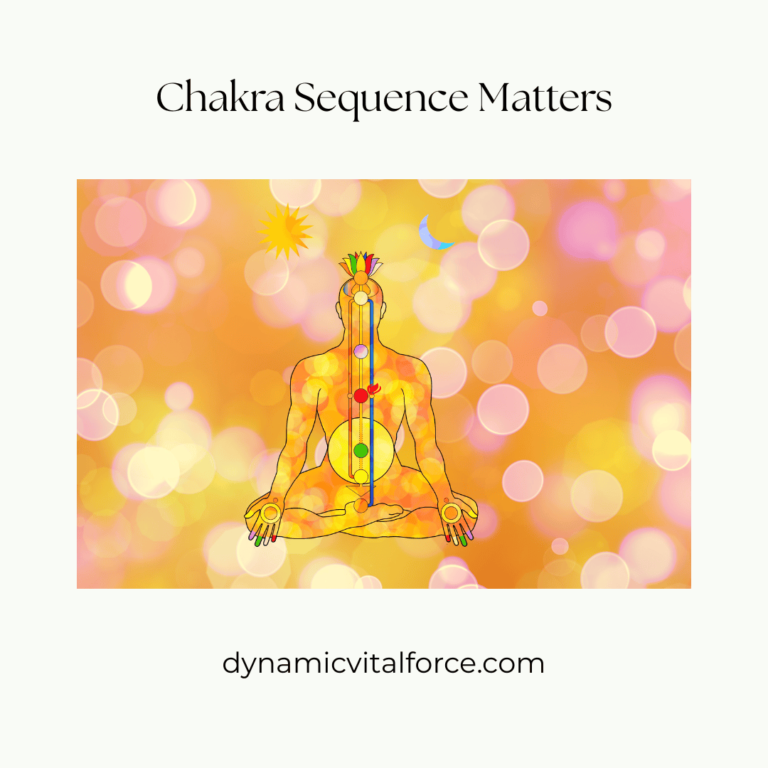
Why Chakra Sequencing Matters in Chakra Spinning
Many people attempt to activate higher chakras before stabilizing the lower ones.
This can create situations where:
- the Third Eye becomes overstimulated while emotions remain unresolved
- the Crown Chakra becomes overactive while the nervous system feels unsafe
- spiritual practices intensify anxiety instead of peace
An experienced practitioner does not focus only on one spinning chakra in isolation. They observe:
- the sequence of imbalance
- the relationship between chakras
- nervous system regulation
- emotional history
- energetic flow through the entire system
Sometimes the solution is not “opening” a chakra further. Sometimes the real healing comes from stabilizing the chakras beneath it.
Learn why Chakra Sequence matters in the energy healing therapy here.
The Deeper Meaning Behind Chakra Spinning and Movement
Chakra spinning direction is ultimately not about mystical performance or dramatic spiritual experiences. It is about understanding how energy reflects human experience.
Your chakras often mirror:
- how safe you feel
- how you process emotions
- how clearly you express yourself
- how stable your identity is
- how grounded your spirituality has become
Learning to interpret these patterns requires far more than memorizing chakra meanings. It involves understanding the connection between:
- energy
- psychology
- trauma
- nervous system regulation
- emotional healing
- consciousness development
This is where deeper chakra healing work begins.
In my book on 7 Chakra Healing ( coming soon), I explore:
- how chakra imbalances actually develop
- how practitioners read energetic patterns
- the difference between activation and healing
- why chakra sequencing changes everything
- how trauma affects chakra function
- how to safely balance the entire system without spiritual bypassing
Because true chakra healing is not about forcing energy open — it is about creating a system stable enough to heal naturally.